Friday, July 09, 2004

Strategy in a Week - Wednesday

Strategic Analysis What is Strategic Analysis About asking the right questions and remembering answers are from past and present so may be no guide to the future. Need to consider:

  • Wider environment and its significant influences (look for change and discontinuity)
  • Our organisation's strengths and weaknesses
  • Our competition, opportunities and threats Environment PEST divides environment into four categories
  • Political
  • Economic
  • Social
  • Technological Useful way to understand the environment we work in. PEST Analysis DEPICTS may provide a better picture (Don't expect this in the book this is a pure Scouse departure based on stuff from JMU) DEPICTS divides environment into seven categories
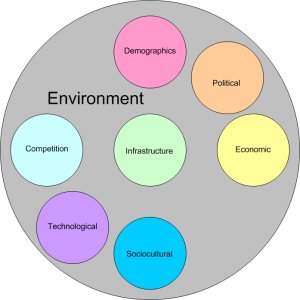
  • Demographic
  • Economic
  • Political
  • Infrastructure
  • Competition
  • Technological
  • Sociocultural DEPICTS Analysis Analysing the Organisation SWOT analysis probably the most useful tool. Identifies how well placed our organisation is. Key thing with SWOT is keep it focused and don't do it alone.
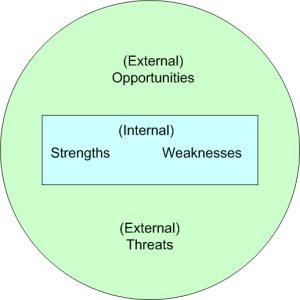
  • Strenghts
  • Weaknesses
  • Opportunities
  • Threats SWOT Analysis Analysing the Competition Porter's Five forces model can be used to analyse the competition:
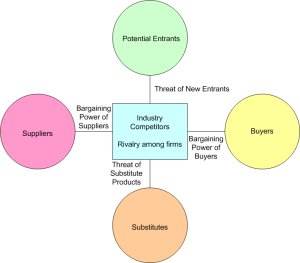
  • Competative rivalry: how many people are going after the same business
  • Power of suppliers: how much power fo they have to influence costs
  • Power of buyers: increases if they are small in number relative to no organisations
  • Threat of substitutes: if alternatives will do no chance to raise prices
  • Threat of potential new entrants: how easy is it to enter market and add to rivalry 5 Forces Analysis Need to maintain differnetiation with rest of competition. This is a constantly moving target. Key Trends Affecting Environment
  • Globalisation: market no longer just local
  • Technological advancement: changes way we operate
  • Societal change: Key thing is what you know and how you use knowledge
  • Organisation is a group of stakeholders e.g. suppliers, customers, employees etc.
  • Reliance on innovation for success: stay still you stagnate
  • Competition: monopolies seldom exist
  • Diverse workforce: enriches the organisation
  • Changed organisational structure: tends to be more flexible
  • Lifelong learning: needed to keep pace with change
  • Change cycle: is speeding up. Don't dwell in the past Use the tools to understand current state of play and then develop an understanding of the future.

  • No comments: